
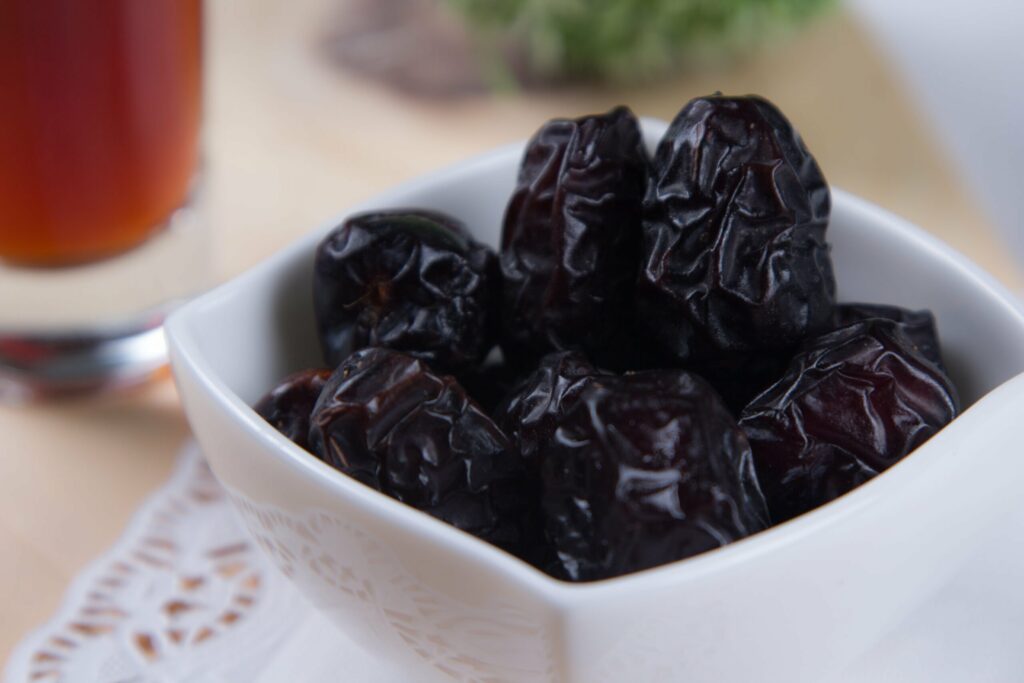
Most buyers only ever meet three date varieties: Medjool, Deglet Noor and whatever generic "kurma" is stacked at the pasar malam. As a distributor, that's the gap we work in — sourcing the varieties nobody stocks because nobody's asked for them yet.
Why rare varieties sit in the warehouse longer
A container of Hayyani or Sukkari costs the same to import as a container of Medjool, but it moves slower off the shelf. Retailers are cautious about stocking a name their customers won't recognise, so distributors end up carrying more inventory risk on the unfamiliar varieties. That's part of why they're priced differently from mainstream stock — not because they're lower quality, but because the turnover is slower and the storage window has to be longer.
Hayyani: dark, chewy, and a harder sell than it should be
Hayyani comes out of Saudi Arabia's Qassim and Madinah regions, almost black in colour with a dense, chewy bite and a prune-like depth to the sweetness. It doesn't photograph as well as a plump Medjool, which is honestly the main reason it's a harder sell to retail buyers — the taste holds up fine on its own.
Khalas: the UAE's everyday date, underrated here
Khalas is one of the most widely eaten dates in the Gulf, and yet it's barely stocked in Malaysia. Golden-brown, medium-sized, with a soft chew and a mild citrus note under the sweetness — it's closer to an everyday eating date than a gift-box date, which makes it a reasonable stock choice for a retailer selling by weight rather than by box.
Sukkari: Oman's honey-toned specialty
Sukkari (the name literally means "sugary") is grown mainly around Al Qassim and parts of Oman. Light amber skin, a soft near-melting texture, and a floral sweetness that's noticeably different from the caramel notes in Medjool. It commands a premium in its home market and, when it does arrive here, usually sells through specialty grocers rather than general retail.
What this means for buyers
If you're a retailer or a home buyer reading this: ask your supplier what else is in the container besides Medjool. Rare varieties are usually priced per kilo close to mid-tier Medjool, sometimes less, because the import volume is smaller and the marketing budget behind them is zero. You're paying for the fruit, not the branding — for some buyers that's the appeal.
We also carry Kurma Mariami, an Iranian variety that sits in a similar niche — well known at home, barely known here — and our wholesaler variation guide covers texture differences across the varieties we stock in more depth. For the mainstream comparison point, Medjool remains the benchmark most buyers measure everything else against.
The short version
Hayyani, Khalas and Sukkari aren't rare because they're inferior — they're rare in this market because nobody's built demand for them yet. If you distribute or retail dates and you've never stocked anything besides Medjool, that's inventory diversity sitting on the table.