
This post's title promises easy weight loss from a raw diet. The older version of this post suggested drinking raw vegetables as a glass of freshly squeezed carrot, celery, beet root, parsley and cucumber. Whether a glass like that fills you up as well as the same food eaten whole is something researchers have measured, though with apples rather than vegetables or dates.
One apple, four ways
Flood-Obbagy and Rolls of Pennsylvania State University published the trial in the journal Appetite in 2009 (PubMed 19110020). Once a week for 5 weeks, 58 adults came in for lunch. Fifteen minutes before the meal they were given a starter of apple in one form: a whole apple, applesauce, apple juice, or apple juice with fibre added. On one of the weeks they had no starter at all.
Every starter weighed 266g and carried 125 kcal. The researchers matched them for energy density and for how fast they were eaten, so the form of the apple was the thing being tested. After the starter, people ate as much of the test meal as they wanted.
What changed at lunch
The whole apple did best. Compared with the week with no starter, eating the apple first cut total lunch energy intake, starter included, by 15%, or 187 kcal. Intake was also lower after the apple than after the applesauce or either juice. Fullness ratings lined up in the same order: apple first, then applesauce, then the two juices, then no starter.
The fibre-added juice is the result worth noticing. Adding fibre at the level found naturally in apples did not make the juice any more filling. The authors concluded that solid fruit affects satiety more than puréed fruit or juice, and that eating fruit at the start of a meal can reduce energy intake.
What that means for a raw plan
A raw diet can be eaten or drunk. On this evidence, at least for apples, the version you chew is the one that leaves you fuller. The trial measured single lunches, not weight over months, so it says nothing directly about how much weight anyone would lose. It does suggest that a juice-heavy raw plan gives up part of what makes fruit filling.
A practical reading is to keep most raw fruit whole, and to eat a piece at the start of a meal.
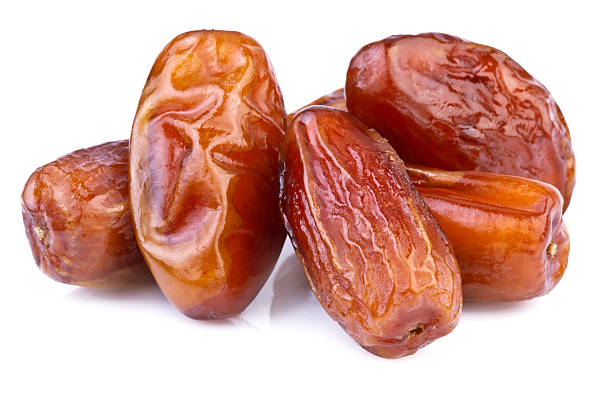
Dates in blended raw recipes
The older version of this post described a raw chocolate cake held together by Medjool dates. In a recipe like that the dates are blended, not eaten whole. The apple trial did not test dates, so it can't say how filling a whole date is.
What USDA FoodData Central does show is how different the two fruits are by weight. 100g of raw apple with skin has 52 kcal and 85.6g of water. The same weight of Medjool has 277 kcal and 21.3g of water, along with 66.5g of total sugars and 6.7g of fibre.
So a date is already a concentrated food before it goes in the blender. 125 kcal, the size of each starter in the trial, is about 240g of apple but only about 45g of Medjool. Blend those 45g into a smoothie or a cake base and there is very little left to chew.

The link from the older post
The older version of this post also suggested nuts as a savoury snack. For anyone who wants the page that post pointed to, the link to find more information is kept here.
Buying dates in Malaysia
Distributor Kurma describes itself as a date supplier in Malaysia, with prices for retail and wholesale and delivery across Malaysia, on its about us page. Its contact form is not available at the moment, so the contact us page gives a WhatsApp number instead. More articles are on the Distributor Kurma blog.
This article is general information, not personal advice. If you plan a big change to the way you eat, speak to your GP or a dietitian first.